Gauze bandage rolls are the quiet workhorses of wound care. They live in clinic drawers, first aid kits, sports bags and veterinary cabinets, and most people never think about them until a dressing needs holding in place. We have spent years supplying these rolls to importers, distributors, first aid kit assemblers and pharmacy chains, and the questions buyers ask are always remarkably similar: what is the roll actually made of, which width should I stock, and how do I keep quality consistent from one shipment to the next? This guide answers those questions in plain language.
What a Gauze Bandage Roll Really Is
A gauze bandage roll is a continuous length of woven cotton gauze wound onto itself, usually finished with a folded or lightly stiffened edge so it can be handled without unravelling. The cotton yarn is woven in a simple crisscross pattern, which leaves the small open mesh that gives gauze its breathability and its ability to grip a dressing underneath.
The number that matters most on a specification sheet is the ply count, meaning how many layers of yarn are woven together. A 2-ply roll is light and airy, and works well when the job is simply holding a pad in place. A 4-ply roll carries more absorbency and more body, so it holds its shape when wrapped around a joint. Yarn count, thread density and the way the edges are cut all influence how the roll behaves in the hand, which is something buyers only appreciate after they have compared samples side by side.
 Non-Sterile Cotton Gauze Bandage RollsA practical non-sterile cotton gauze roll for fixing and wrapping, available in multiple yarn counts, mesh options, widths and lengths.View Product →
The Main Types You Will See on the Market
Most catalogues look similar at first glance, but the rolls inside them are not interchangeable. These are the versions our customers order most often:
- Flat woven rolls — the classic plain gauze roll. Little stretch, predictable behaviour, and a sensible default for general dressing retention and padding.
- Krinkle (crimped) rolls — the fabric is creased during finishing, so the roll gives slightly and follows curved surfaces such as a forearm or a heel without cutting in.
- Conforming stretch rolls — knitted or loosely woven for greater elasticity. Useful on limbs where a rigid wrap would loosen as swelling changes.
- PBT bandage rolls — high-elasticity knitted rolls, typically used as a secondary layer under casting or as light compression.
- Jumbo and absorbent rolls — long 100-yard formats that busy clinics cut down to the length they need on the day.
Choosing between them is less about which one is "best" and more about what the end user will actually do with it. A first aid kit filled with flat rolls behaves very differently from one packed with crimped rolls, even though both look identical on the shelf.
 Sterile Cotton Krinkle Gauze Bandage RollIndividually pouch-wrapped sterile krinkle roll for wound dressing and fixation, with soft cotton gauze, stretch and absorbency.View Product →
Sterile or Non-Sterile: A Decision Buyers Get Wrong
The word "sterile" carries a price premium, and it is worth paying only when the roll will touch an open wound as a primary layer. Sterile rolls are individually pouch-wrapped, usually with a peel-open paper or film lid, and they carry a shelf life tied to the packaging integrity rather than to the cotton itself. If the pouch is creased, damp or punctured in transit, the sterility claim is gone.
Non-sterile rolls are the practical choice for everything one step removed from the wound: securing a pad, adding padding under a bandage, splinting, veterinary wrapping or general clinic use where the roll is handled with gloves. They cost less, generate less packaging waste and are easier to stock in volume. Many distributors carry both and let the clinical setting decide — a hospital ward may want sterile rolls in small widths, while a first aid kit assembler may want non-sterile rolls almost exclusively.
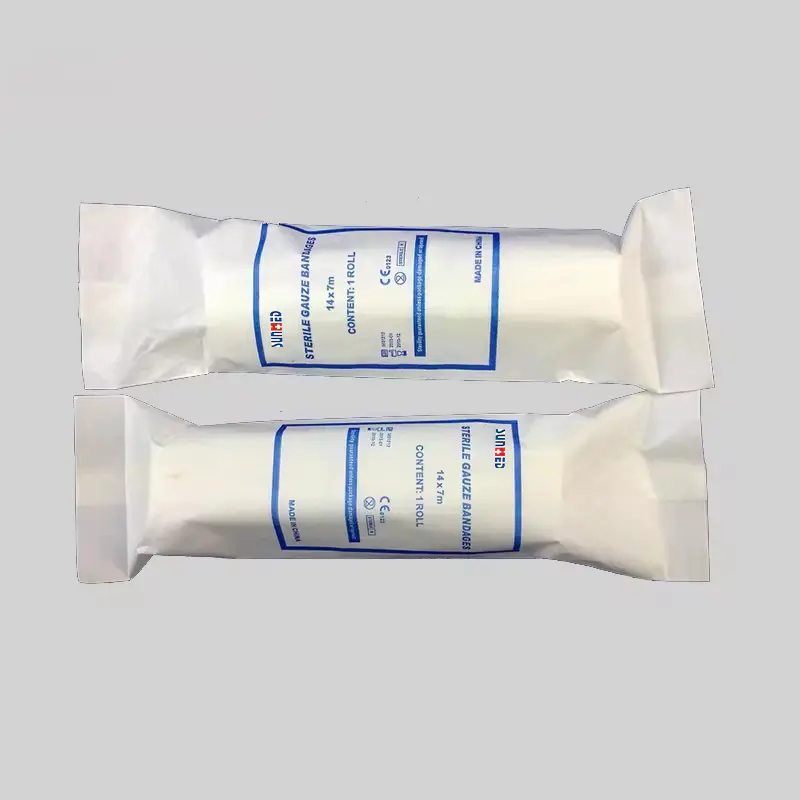 Sterile Cotton Gauze Bandage RollsSterile cotton gauze roll with high absorbency and softness, offered in multiple widths, lengths and yarn counts for clinical dressing use.View Product →
Choosing Width, Ply and Length
Width is the specification that customers change most often after their first order, simply because it is the hardest to judge on a screen. As a rough guide, match the width to the body part rather than to the dressing size.
Typical gauze bandage roll widths and the situations they suit best.
| Width |
Common use |
Buying note |
| 2.5 cm (1 in) |
Fingers, toes, small digits |
High unit count, popular in retail kits |
| 5 cm (2 in) |
Hands, wrists, small limbs |
Steady all-round seller |
| 7.5 cm (3 in) |
Forearms, lower legs, general retention |
The most requested width overall |
| 10 cm (4 in) |
Knees, elbows, larger limbs |
Often paired with padding and padding bandages |
| 15 cm (6 in) |
Thighs, torso, large dressings, veterinary use |
Lower volume, worth stocking for repeat accounts |
Length matters as much as width when you calculate cost per application. A 4-metre stretched roll and a 4-metre flat roll are not equivalent, and some suppliers quote stretched length while shipping an unstretched product. Always confirm whether the stated length refers to the relaxed or the extended roll.
How to Wrap a Wound with a Gauze Roll
Technique matters more than most people expect, because a wrap that is too tight restricts circulation and one that is too loose slides off within minutes.
- Clean and cover the wound with an appropriate pad or dressing first — the gauze roll is normally the retention layer, not the contact layer.
- Start at the point furthest from the heart and work upward, so lymph and venous return are not impeded.
- Anchor the roll with two turns over the dressing, keeping the fabric flat rather than twisted.
- Overlap each turn by roughly half the roll width, using even, gentle tension throughout.
- Check circulation by pressing a fingertip beyond the wrap; colour should return quickly.
- Secure the end with tape or a clip, tucked away from the wound so it does not rub.
Anyone wrapping regularly will also tell you that edge quality is what separates a good roll from a frustrating one. A cleanly cut, slightly folded edge stays flat on the skin; a frayed edge sheds loose fibres and forces the user to stop and re-roll.
What to Check Before Ordering in Bulk
When you move from samples to a container, small differences multiply. These are the points we walk through with every bulk buyer, and they tend to prevent most after-sales problems.
- Ply and weight consistency — ask for a specification with grams per square metre, not just "4-ply".
- Edge finish — cut, folded or crimped, and whether loose threads are trimmed to a defined tolerance.
- Packaging format — bulk cartons, poly bags or individually wrapped, and the labelling standard required in your market.
- Documentation — sterilisation records, material declarations and test reports that match the shipment, not just a file from a previous year.
- Private label details — printed pouches, brand colours and carton artwork add lead time, so plan them early.
Our OEM programme exists precisely for this stage, where a distributor wants their own artwork on the pouch and a stable specification across repeat orders. It also helps to agree on an acceptable tolerance for roll length and width up front, because a two-centimetre variation that is invisible on a sample becomes very visible when a nurse is counting rolls on a busy ward.
Questions We Hear Most Often
Can a gauze roll be used directly on a wound?
It can, particularly in an emergency, but gauze fibres may stick to a dry wound surface. For anything beyond a temporary covering, place a non-adherent pad underneath and use the roll to hold it in position.
How long can rolls be stored?
Cotton gauze itself keeps well for years in dry conditions. Sterile rolls should be used within the shelf life printed on the pouch, and any pouch that has lost its seal should be treated as non-sterile.
Do coloured or camouflage rolls serve a medical purpose?
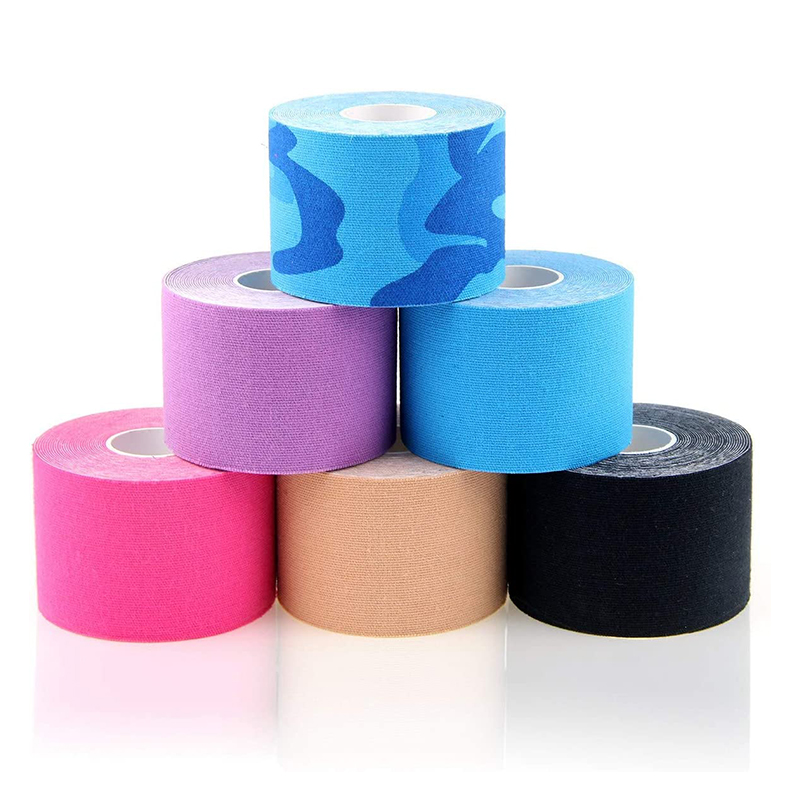
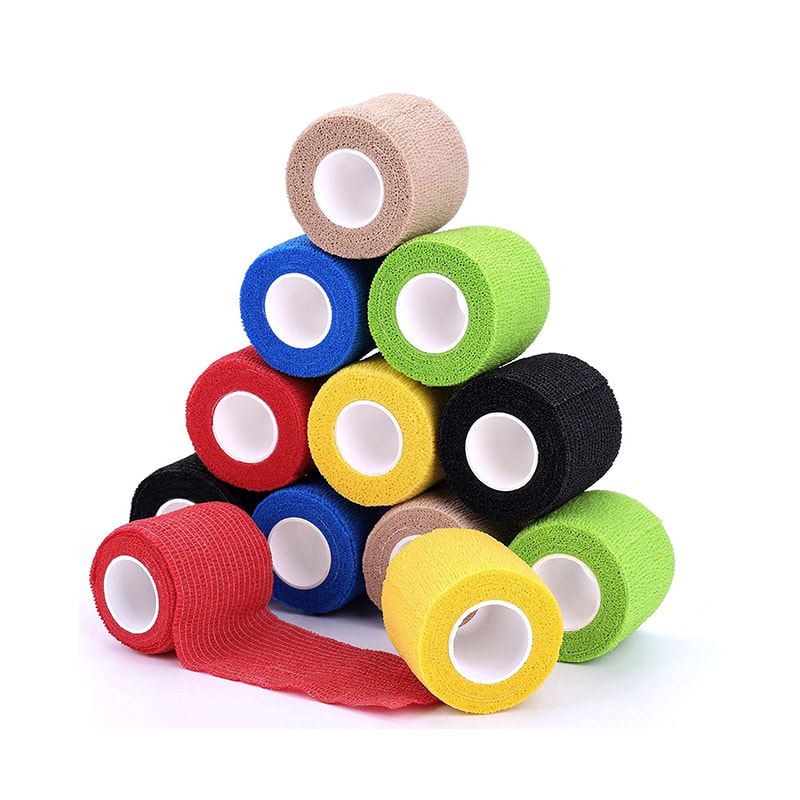
Not clinically, but they matter commercially. Coloured rolls are widely used in veterinary work and outdoor kits, where a bright white wrap is impractical or simply less popular with end users.
Gauze bandage rolls are a commodity on paper, but the difference between a roll that nurses request by name and one that sits in the storeroom comes down to ply, edge finish and consistency. If you are comparing suppliers, order physical samples of the same width from each and wrap a limb with them — your hands will decide faster than any datasheet. You can read more about how we work with distributors and kit assemblers on our company page, or send us your specification and we will tell you honestly whether it is a good fit for what we produce.

 日本語
 한국어
 Tiếng Việt
 عربى
 Nederlands
 Bahasa Melayu
 Polskie
 Português
 ไทย
 svenska
 עִברִית
 norsk
 Suomalainen
 Ελληνικά
 Română
 čeština
 Magyar
 Pilipino
 Український
 dansk
 pt-br
 By Admin