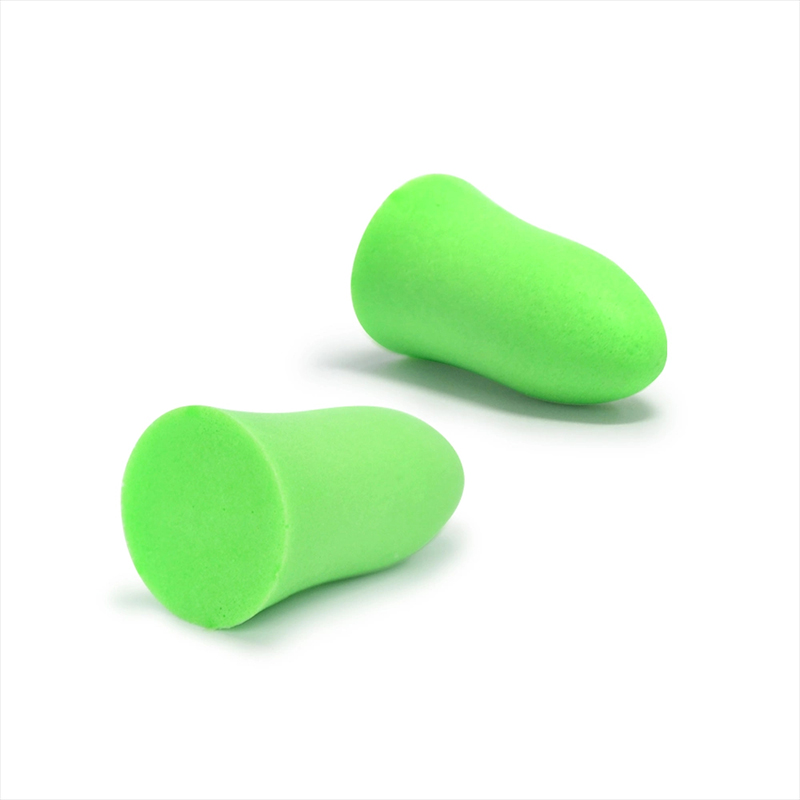
Every year, billions of disposable foam earplugs are used once and discarded. For individual users who need hearing protection occasionally — at a concert, on a noisy flight, or during a single shift in a loud environment — the disposable option is perfectly adequate. But for the significant population of workers, athletes, swimmers, and frequent travelers who need reliable hearing protection daily or multiple times per week, the disposable model creates recurring cost, inconsistent performance, and unnecessary waste. Reusable silicone earplugs offer a compelling alternative — one that, when properly manufactured and maintained, delivers durable protection, predictable attenuation, and a total cost of ownership that is substantially lower than the disposable equivalent over any extended period of use.
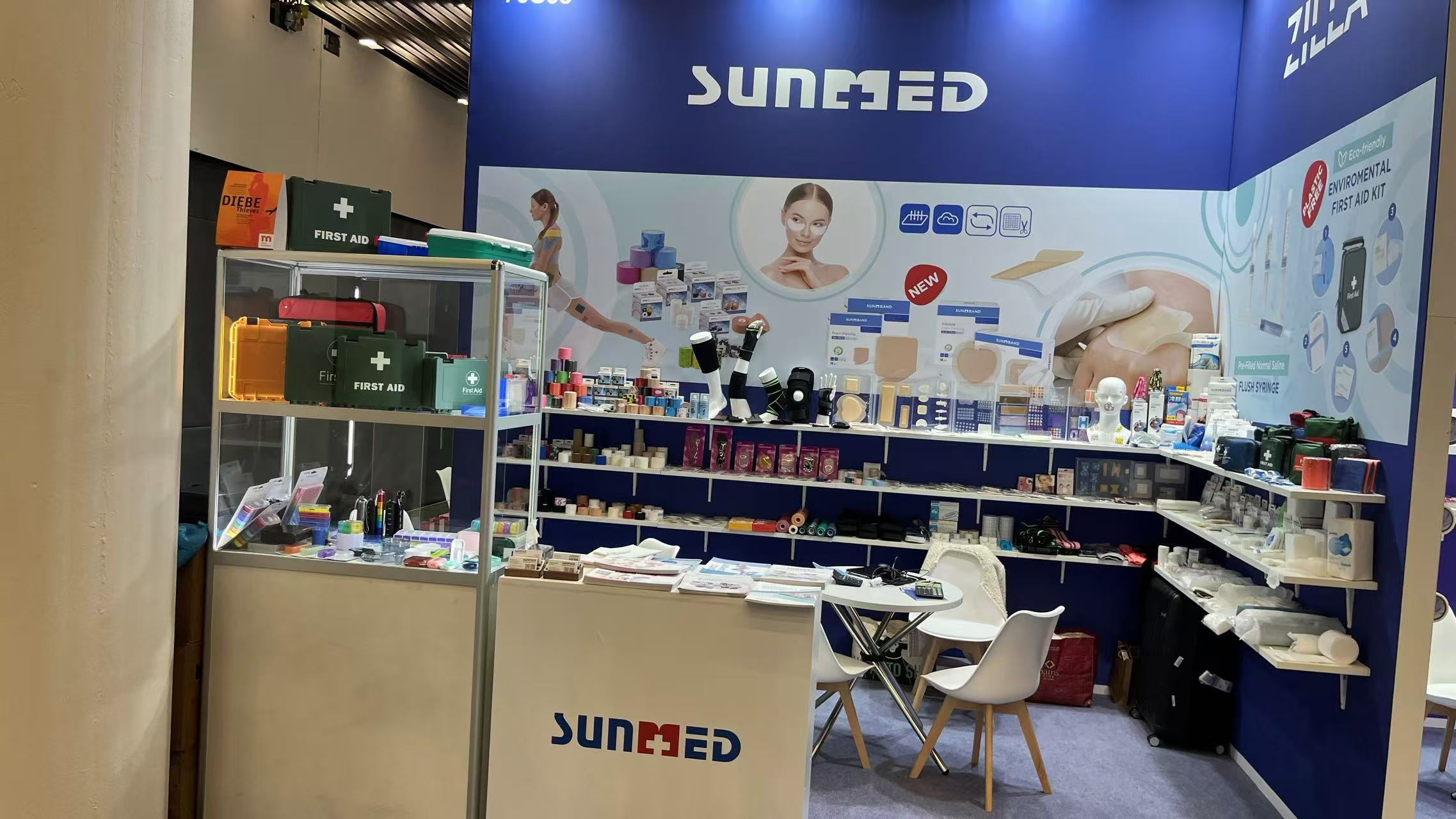
Manufacturers like Suzhou Sunmed Reusable Silicone Earplugs have developed these products into a mature and technically sophisticated category, engineering silicone formulations, flange geometries, and stem designs to address the specific demands of different user environments.
The Material Advantage: Why Silicone Works for Reusable Hearing Protection
The choice of silicone as the primary material for reusable earplugs is not arbitrary. Medical-grade silicone possesses a combination of properties that make it exceptionally well suited to a device that must conform to human anatomy, be worn in contact with sensitive skin for extended periods, withstand repeated cleaning, and maintain its physical characteristics over months or years of use.
Silicone is chemically inert, meaning it does not react with skin secretions, cleaning agents, or the biological environment of the ear canal. It is hypoallergenic, making it suitable for users with latex sensitivity or skin that reacts to other elastomeric materials. It is dimensionally stable across a wide range of temperatures — a silicone earplug that has been worn in a cold outdoor environment and then moved to a warm factory will not stiffen, swell, or change its fit characteristics. And crucially, silicone resists the absorption of moisture, oils, and debris, which means the material itself does not harbor bacteria or degrade in the way that open-cell foam does over time.
These properties directly support the reusability claim. A foam earplug’s cellular structure traps ear wax, moisture, and skin debris after a single use, making reuse both unhygienic and mechanically unreliable — the compressed and contaminated foam no longer expands properly or seals consistently. Silicone’s non-porous, smooth surface can be cleaned thoroughly with soap and water or a standard disinfecting solution, restoring it to a hygienic and mechanically sound condition for the next use.
Flanged Design and How It Creates a Reliable Acoustic Seal
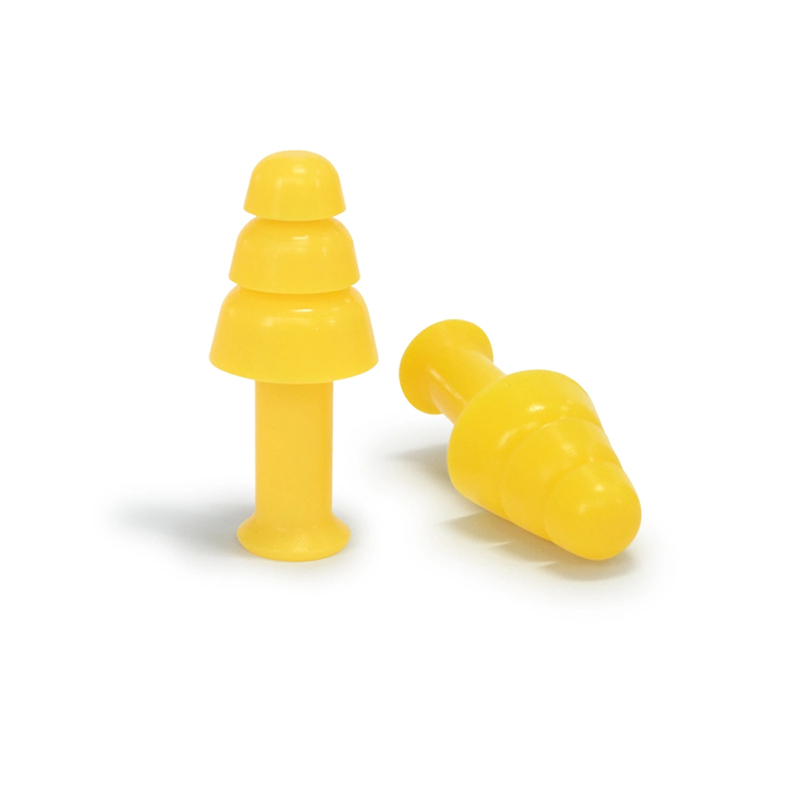
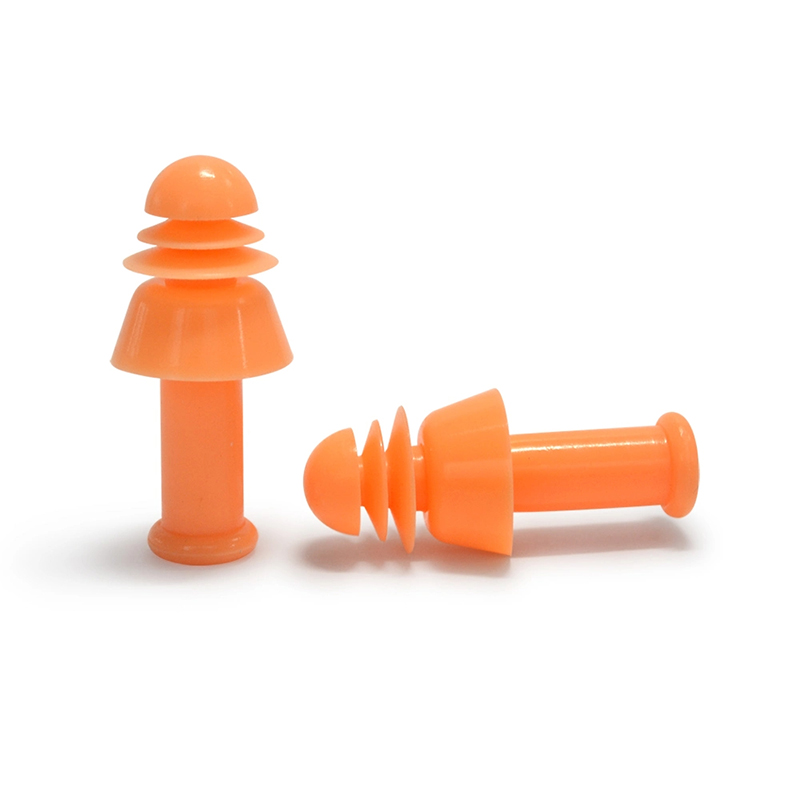
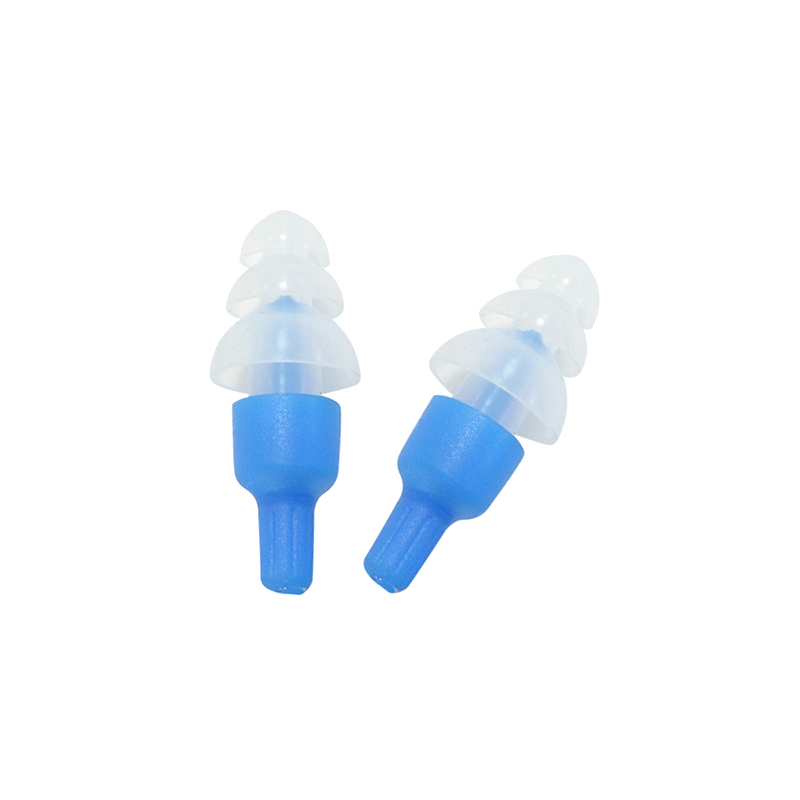
The most common design for reusable silicone earplugs is the flanged plug — a stem with two, three, or four soft silicone rings (flanges) that create a series of concentric seals within the ear canal. This design is fundamentally different from the foam plug’s single-body compression seal and has distinct performance implications.
Each flange ring seats against the walls of the ear canal independently. If one ring does not make perfect contact due to an irregular canal geometry, the next ring provides a secondary seal. This redundancy makes flanged silicone earplugs more forgiving of anatomical variation than single-body designs and contributes to more consistent real-world attenuation across different users. It also means that the seal is maintained during jaw movement, talking, and head rotation — activities that can temporarily break the seal of a foam earplug that relies entirely on expansion pressure.
The insertion process for a flanged silicone earplug is also more consistent than for foam. The user does not need to roll the plug, reach over the head to straighten the ear canal, or hold the plug in place for 30 seconds while foam expands. The plug is simply inserted with a gentle push and slight rotation until resistance is felt and the ambient sound reduction confirms the seal. This makes correct use faster, less technique-dependent, and easier to verify — a meaningful advantage in workplace settings where hearing protection compliance is a safety priority.
Suzhou Sunmed Reusable Silicone Earplugs invest considerable engineering attention in flange geometry: the diameter, thickness, angle, and spacing of each ring are calibrated to achieve the target attenuation rating while maintaining comfortable insertion and removal. Flange rings that are too stiff create discomfort and may cause users to avoid wearing the plugs at all; rings that are too soft collapse rather than sealing, reducing attenuation. The silicone compound formulation — specifically its Shore A hardness — is the critical variable that governs this balance.
Key Application Areas: Where Reusable Silicone Earplugs Outperform Alternatives
Reusable silicone earplugs are not the right choice for every hearing protection scenario, but in several specific contexts they are clearly superior to both disposable foam and earmuffs.
Frequent industrial users. Workers in manufacturing, construction, woodworking, and metalworking who require hearing protection for every shift benefit substantially from reusable silicone plugs. The daily cost per use drops to a small fraction of disposables over a product lifespan that may extend to a year or more with proper care. Flanged plugs also offer consistent insertion and a repeatable seal that experienced users achieve reliably without the variability that affects foam plug performance.
Swimmers and water sports participants. Standard foam earplugs are not suitable for water use — they absorb water, lose structural integrity, and fail to maintain a seal in aquatic environments. Solid silicone earplugs designed specifically for swimming create a watertight seal that prevents water from entering the ear canal, reducing the risk of swimmer’s ear (otitis externa) and exostosis (bony growths in the ear canal caused by repeated cold water exposure). This is a distinct application category where silicone has no foam equivalent.
Musicians and sound professionals. People who work in music production, live sound, or performance need hearing protection that attenuates volume without distorting the frequency balance of sound — they need to hear accurately, just more quietly. Flat-attenuation silicone earplugs, engineered to reduce sound levels evenly across the audible frequency spectrum, serve this need in ways that standard foam plugs — which attenuate high frequencies far more than low frequencies — cannot. Reusable silicone is the standard material in musician’s earplugs for this reason.
Sleeping and travel. For users who wear earplugs nightly or on frequent long-haul travel, silicone’s softness, skin compatibility, and ease of cleaning make it more suitable for sustained use than foam. Silicone does not generate the heat buildup associated with foam’s closed-cell structure, and its smooth surface causes less friction against pillow fabric during sleep movement.
A Practical Comparison: Reusable Silicone vs. Disposable Foam Earplugs
| Feature | Reusable Silicone Earplugs | Disposable Foam Earplugs |
| NRR / Attenuation | 22–27 dB (moderate) | 29–33 dB (high) |
| Insertion technique | Simple push-and-twist | Roll, insert, hold |
| Consistency of fit | High (flanged seal) | Variable (user technique) |
| Hygiene | Washable, non-porous | Single-use only |
| Water resistance | Excellent (swim-rated variants) | None |
| Cost over 12 months | Low (one purchase) | High (daily replacement) |
| Environmental impact | Low (long product lifespan) | High (landfill volume) |
| Frequency response | Flat (musician variants) | High-frequency biased |
| Comfort for extended wear | High | High (initially) |
| Suitable for wet/aquatic use | Yes | No |
The key trade-off is attenuation ceiling. Foam plugs achieve higher maximum NRR values than most silicone flanged plugs. In extremely high-noise environments — above 105 dB — this difference matters clinically, and in such cases foam plugs or double protection (plugs plus earmuffs) may be required. For the majority of industrial, recreational, and personal use cases involving noise levels of 85–100 dB, the attenuation of a quality silicone plug is fully adequate.
What to Look for When Selecting Reusable Silicone Earplugs
Given the range of products available across different price points and application claims, a structured approach to product evaluation helps buyers avoid underperforming options.
Certified attenuation rating. Any earplug used for occupational hearing protection must carry a verified NRR (ANSI S3.19, USA) or SNR rating (EN 352-2, EU). Products without third-party tested attenuation data should not be used in compliance hearing conservation programs. Suzhou Sunmed Reusable Silicone Earplugs are certified to applicable international standards, providing the documentation that occupational health and safety managers require.
Silicone grade. Medical-grade or food-grade silicone is the appropriate specification for any earplug that contacts the skin of the ear canal. Lower-grade silicone compounds may contain plasticizers or residual manufacturing compounds that cause skin irritation. The product specification should state the silicone grade clearly.
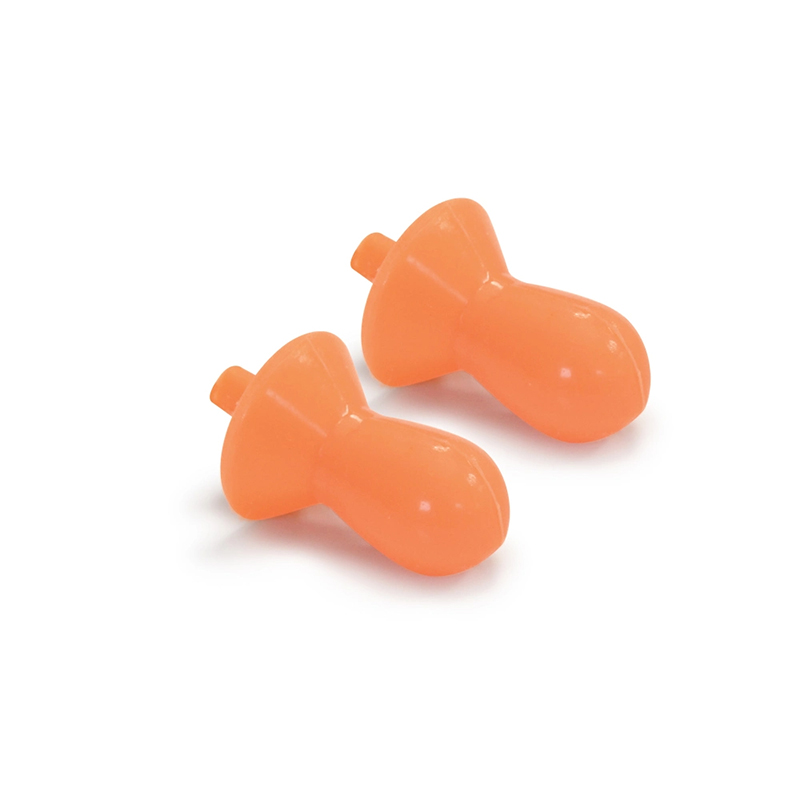
Number of flanges and geometry. Two-flange designs are simpler and sufficient for moderate-noise applications. Three-flange designs provide greater redundancy and higher attenuation, making them more suitable for industrial use. Some specialized designs incorporate a foam tip on a silicone stem, capturing the conformability of foam for the innermost seal while using flanges for the outer seals — a hybrid approach that performs well in high-variability user populations.
Carrying case and cord. Quality reusable silicone earplugs are typically supplied with a rigid carrying case that protects the plugs between uses and prevents contamination when stored in a pocket or toolbox. A corded option — where the two plugs are connected by a flexible cord — prevents loss and allows the plugs to hang around the neck when removed temporarily, which supports compliance in environments where plugs must be removed and reinserted frequently.
Cleanability. The surface of the plug should be fully smooth with no recesses or joints that trap debris. Some flanged plug designs incorporate a detachable stem that allows each component to be cleaned separately; this is useful for users in high-contamination environments who need to be confident of thorough cleaning.
Care and Maintenance: Extending Product Life and Maintaining Hygiene
A reusable silicone earplug’s value proposition depends entirely on maintaining it correctly. Neglected plugs that carry accumulated ear wax, debris, and microbial contamination into the ear canal are worse than disposables — they combine the hygiene risks of a used product with the false confidence of a “clean” reusable one.
The cleaning protocol is straightforward. After each use, the plugs should be wiped with a clean cloth to remove visible debris, then washed in warm water with mild soap, rinsed thoroughly, and allowed to air dry completely before storage. Silicone can also be disinfected with isopropyl alcohol solution without material degradation — a useful option for workplace use where shared plugs (in try-on or fitting programs) need to be disinfected between users.
Inspect the plugs regularly for signs of degradation: tears in the flange rings, permanent deformation of the stem, discoloration that persists after cleaning, or stiffening of the silicone compound. Any of these conditions indicate that the plug should be replaced. Under normal use with correct cleaning, a quality silicone earplug from a manufacturer like Suzhou Sunmed Reusable Silicone Earplugs will typically maintain its performance characteristics for six to twelve months of daily use — representing a significant cost and waste reduction compared to disposable equivalents over the same period.
The Long-Term Value Argument
The decision between disposable and reusable hearing protection is not purely a performance decision — it is also an operational, economic, and environmental one. For individual users and organizations that require hearing protection as part of daily routines, reusable silicone earplugs represent a more rational system: lower recurring cost, more consistent user compliance due to simpler insertion technique, reduced waste generation, and the expanded application range that silicone’s material properties enable in wet and acoustic-precision environments. When the product is engineered to the standards that specialists like Suzhou Sunmed Reusable Silicone Earplugs bring to the category, the long-term case for making the switch is compelling.

 日本語
日本語 한국어
한국어 Tiếng Việt
 عربى
عربى Nederlands
 Bahasa Melayu
 Polskie
 Português
 ไทย
ไทย svenska
 עִברִית
 norsk
norsk Suomalainen
 Ελληνικά
 Română
 čeština
 Magyar
 Pilipino
 Український
 dansk
dansk pt-br
pt-br By Admin